







PODCAST: Chronic pain doesn’t have to win. Try this instead.
By Fred Diamond
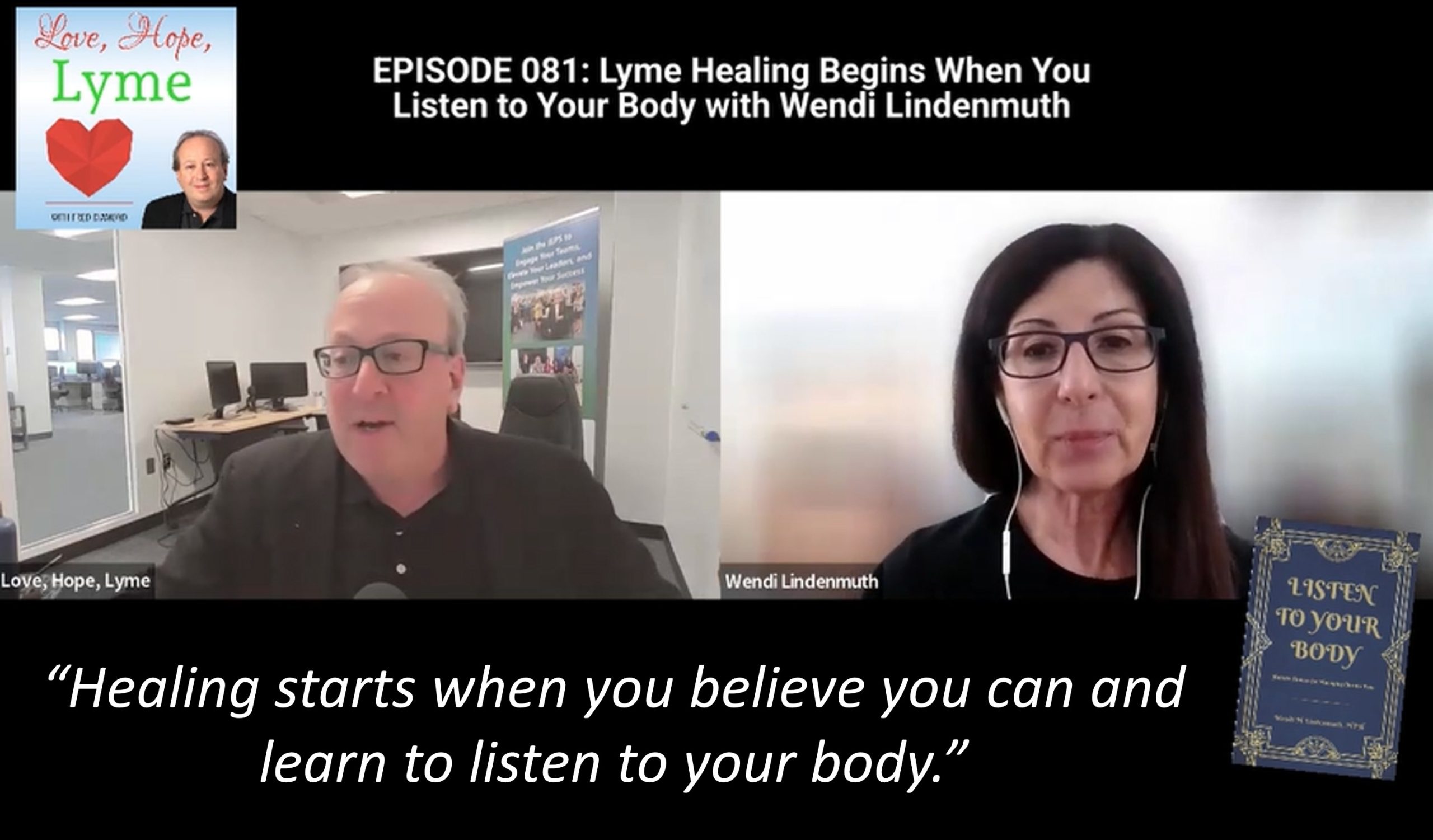
Wendi Lindenmuth says that healing from Lyme disease begins not with fighting the body but with resolving to listen to it.
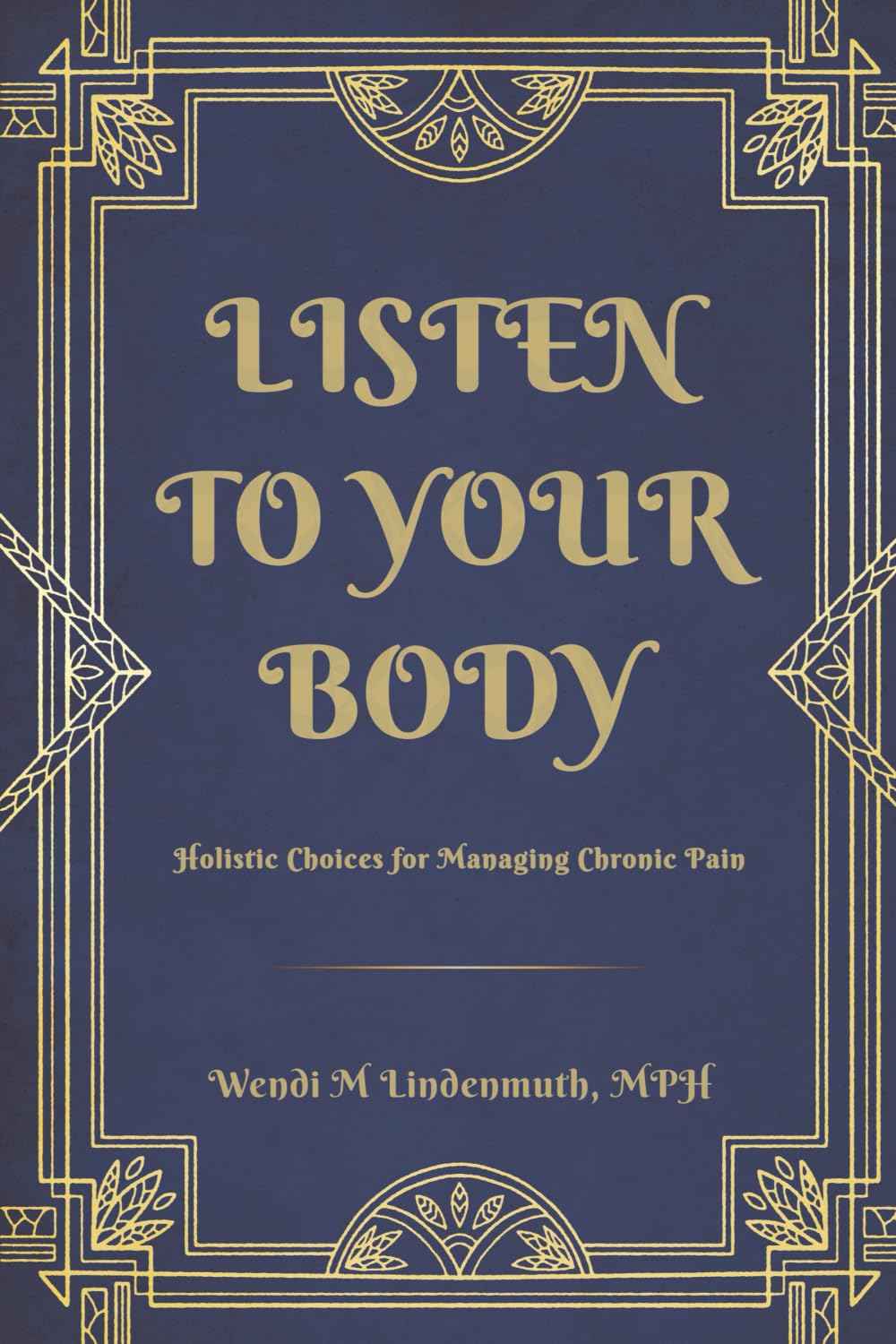
That’s the core message Wendi, author of Listen to Your Body: Holistic Choices for Managing Chronic Pain, says in her recent appearance on my Love, Hope, Lyme podcast. Wendi speaks as someone who has lived the reality of chronic Lyme and rebuilt her life from within it.
She dutifully documents almost everything chronic Lyme survivors need to be thinking about to reach a place of healing and presents them in the book.
Her journey begins in 2015, when a once-active athlete suddenly finds herself unable to function. “I couldn’t walk, my brain just wasn’t working,” she recalls.
What follows is familiar to many Lyme patients: a long, frustrating path through multiple doctors, delayed diagnosis, and the realization that conventional care alone may not be enough. But what makes her perspective powerful isn’t just her survival; it’s how she reframes the entire healing process.
“I needed to be my own scientific investigator,” she says, describing the shift that many patients must make toward self-advocacy.
Healing begins with belief
One of Wendi’s central messages is deceptively simple: healing starts with belief.
“The first thing is believing that you can heal,” she explains.
For many Lyme patients, that belief is hard-won and challenging to achieve. After years of symptoms, misdiagnoses, and discouraging prognoses, she says hope can feel fragile. Social media groups, while supportive, can sometimes reinforce fear or hopelessness.
Wendi recognizes this trap. Her advice is both practical and empowering: step back from what doesn’t serve you. Curate your inputs and seek out voices, practices, and communities that reinforce possibility rather than limitation.
“You get stuck,” she says, describing how patients can fall into cycles of negative information and discouraging narratives.
To get past the roadblocks, for that includes meditation, prayer, and intentional mindset work.
“Once you do that you just feel lighter about it and more motivated,” she says. “This shift from fear to belief is not denial. It is, instead, the foundation that allows all other healing strategies to take root.”
Nutrition as a daily choice
Wendi also emphasizes the role of nutrition as a process of awareness and experimentation. She points to common inflammatory triggers including sugar, dairy, gluten, soy, and processed foods and explains how they can exacerbate symptoms. But her approach goes deeper than general advice.
“You have to listen to your body,” she says. “If you eat something and afterwards you feel really inflamed, your body is telling you something.”
This idea of listening to the body as an active guide runs throughout her philosophy. Healing, in this view, is not about following a universal diet. It’s about developing a relationship with your body that allows you to make informed, intuitive choices over time.
The underrated power of sleep
If there is one area where Wendi’s advice aligns with many Lyme-literate practitioners, it’s sleep. For Lyme patients, sleep is often disrupted by pain, neurological symptoms, or hormonal imbalances. But Lindenmuth reframes rest as non-negotiable.
“During your sleep process your body is trying to recover,” she explains. “I would sleep 10, 12 hours almost every single night for years, and I learned to be okay with that.”
 That last point is critical. In a culture that often equates productivity with worth, Lyme patients may feel guilt or frustration about needing more rest. Lindenmuth challenges that mindset directly.
“Give yourself some grace,” she advises. “Rest is not weakness. It is repair.”
Reclaiming nature without fear
For many Lyme survivors, nature becomes complicated. The same outdoors that once brought joy may now feel threatening as a source of ticks, reinfection, or anxiety.
Wendi understands this fear deeply. “There was a time where I was afraid to go outside,” she admits. “But I believe that reconnecting with nature can be a powerful part of healing.
Her approach is gradual and compassionate: start small.
“Sit on a porch. Take a short walk. Build confidence step by step. The benefits, she explains, go beyond fresh air. Sunlight supports vitamin D production. Natural environments influence cellular health. Even the concept of “frequency,” the energetic state of the body, can shift in nature.
“If you’re feeling low going outside slowly increases your frequency,” she says. “For patients who feel disconnected from their former lives, these small moments of reconnection can be transformative.”
A radical idea: communicating with pain
Perhaps the most profound and challenging concept Wendi introduces is the idea of communicating with pain. For many Lyme survivors, pain is the enemy and is something to suppress, escape, or endure. She offers a different perspective.
“Your pain is within you,” she says. “Instead of ignoring or fighting it, engage with it through practices like meditation or mindful breathing.”
Lyme survivors can begin to ask questions: Where is the pain? What is it trying to communicate?
“Sometimes you might hear a message and sometimes you might get a visual,” she explains.
This approach may feel unfamiliar or even uncomfortable. But Wendi believes it can fundamentally change the relationship between patient and symptom.
“If we keep sending pain mad, angry thoughts, we’re going to keep those in our body,” she says. “But if we start saying, you are allowed to be in my body right now, it changes the energy around it.”
She says this is not about resignation. It’s about shifting from resistance to awareness and, ultimately, to transformation.
Regulating the nervous system
Underlying many of Wendi’s strategies is a common goal: calming and regulating the nervous system. For Lyme survivors, the nervous system is often in a state of chronic stress and is hyper-alert, overwhelmed, and dysregulated. Healing requires bringing that system back into balance.
One accessible tool she recommends is sound therapy.
“Just sitting there and listening will change your nervous system,” she says, referring to healing frequencies available online. This simplicity is part of her broader philosophy: healing doesn’t always require complexity. Sometimes, small, consistent practices can create meaningful change.
Moving toward possibility
At its core, Wendi’s message is not just about managing symptoms but about reclaiming possibility. She understands the desire that so many patients share: to return to life. To attend gatherings. To travel. To engage with family and community without being defined by illness.
Healing, she suggests, is not a single breakthrough moment. It is a series of choices, made day by day, grounded in a willingness to listen to the body, to the mind, and to the deeper signals that often go unheard.
And for those willing to begin that process, her message is clear that they are not alone. Your body is not your enemy, and healing, in its many forms, remains possible.
Click here to listen to all episodes of the Love, Hope, Lyme Podcast or on YouTube.
Fred Diamond is based in Fairfax, Virginia. His popular book, Love, Hope, Lyme: What Family Members, Partners, and Friends Who Love a Chronic Lyme Survivor Need to Know is available on Amazon. The e-version (pdf) of the book is always free to Lyme survivors. PM Fred on Facebook or LinkedIn for your copy.





We invite you to comment on our Facebook page.
Visit LymeDisease.org Facebook Page