














Is there a link between Lyme disease and alpha‑gal syndrome?
By Meg Muckenhoupt
A new study by Cleveland Clinic researchers shows a strong link between Lyme disease and alpha-gal sensitization.
In this context, sensitization means the immune system has begun producing IgE antibodies to alpha‑gal. This is a sign that the body is primed to react, even if full‑blown symptoms of alpha‑gal syndrome (AGS) haven’t yet appeared.
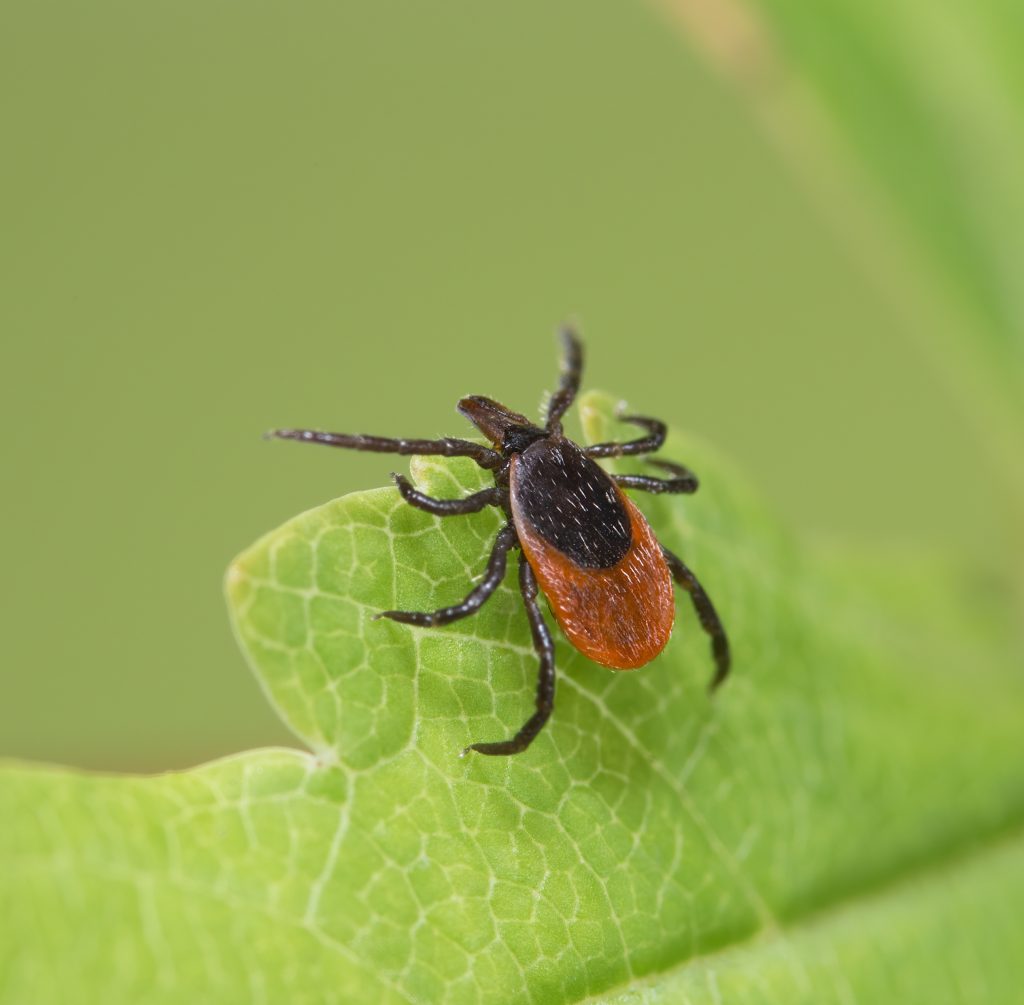
The findings offer compelling evidence that blacklegged ticks (Ixodes spp.) can trigger AGS, raising questions about whether some Lyme patients may also be experiencing AGS without realizing it.
The study, titled The prevalence of alpha-gal IgE among patients with confirmed Lyme serology result, compared two groups in Northeast Ohio. In that area, most tick bites are from blacklegged ticks (Ixodes spp.), not lone star ticks, which are the ones most commonly known to trigger AGS in the United States.
AGS is a tick-induced allergy to galactose-α-1,3-galactose (alpha-gal). Alpha-gal is found in meat from all mammals apart from humans and some primates. It’s also found in milk, other ingredients derived from mammals, and some seaweeds used to make carrageenan–a common food additive..
People with AGS typically develop symptoms a few hours after eating food containing alpha-gal. These symptoms can include hives, rashes, vomiting, diarrhea, or life-threatening anaphylaxis.
A diagnosis of AGS requires both a history of symptoms and a positive test for alpha-gal IgE. The reason for those requirements is that many people are sensitized to alpha-gal and show positive IgE test results, but don’t have symptoms and don’t need to change their diets.
Comparing blood samples
The Cleveland Clinic researchers examined two groups of blood samples: 100 blood samples submitted for Lyme diagnosis with positive results on a Lyme IgG Western blot, and a control group of 100 blood samples submitted for proof of immune status for people with no current or past Lyme diagnoses.
The samples were collected during June-August 2025, which is peak season for blacklegged ticks in Northeast Ohio. The groups were balanced for age and gender.
Out of 200 samples, 17 tested positive for sensitization to alpha-gal, with an alpha-gal IgE of 0.1kU/L or more – the typical cutoff for diagnosis of AGS. Fifteen of those samples were from the Lyme-positive group. Only two came from the control group.
When the researchers used a higher IgE cutoff (0.35 kU/L), the difference between the groups was even clearer. Seven samples in the Lyme positive group were still positive for alpha-gal at the higher cutoff, while none of the samples in the control group were.
While this study is the first to show a link between Lyme disease and alpha-gal sensitization in the U.S., there’s evidence from other sources that blacklegged ticks can cause AGS. In 2025, two studies were published about people who developed AGS after bites from blacklegged ticks in Maine and Washington state.
In Europe, another Ixodes tick species (Ixodes ricinus) seems to both transmit Lyme disease and trigger AGS, although a previous study in Sweden did not show a link between Lyme disease and alpha-gal sensitization.
Since the researchers did not have access to the patients’ clinical history, they could not diagnose AGS– only sensitization. Further research is needed to clarify the relationship between Lyme disease and alpha-gal syndrome, which can mimic Lyme symptoms such as joint pain and brain fog.
Meg Muckenhoupt works with Alpha-gal Information, an Alpha-gal Alliance project.






We invite you to comment on our Facebook page.
Visit LymeDisease.org Facebook Page