








PODCAST: Lyme Warrior and the quiet power of not giving up
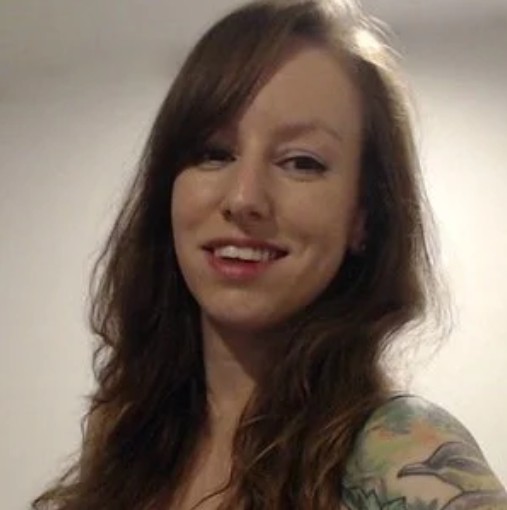
By Fred Diamond
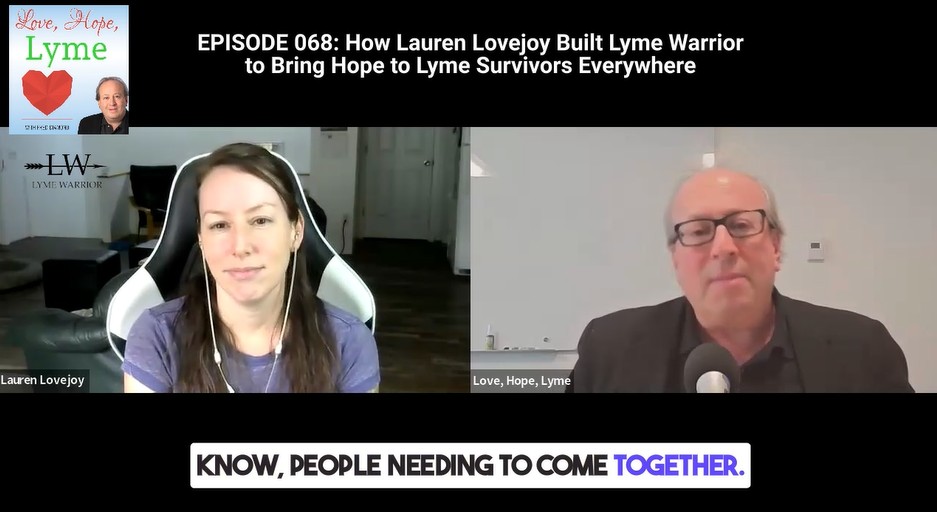
When Lauren Lovejoy, founder of Lyme Warrior, joined me on the Love, Hope, Lyme podcast this week, she shared a story that captures both the heartbreak and resilience at the core of the Lyme disease community.
Twelve years ago, she was in her mid-20s and was vibrant, ambitious, and healthy. Within just three months, that life vanished.
“I went from being a perfectly normal, healthy, functioning individual and within three months I had lost my job and was struggling to stay in college and function,” she says. “I saw every single doctor there was under the sun. I think I saw sixty in two years.”
For Lauren, as for so many with Lyme disease, the descent was abrupt, confusing, and isolating.
Once an active student who worked full-time and exercised regularly, she suddenly found herself unable to do even basic daily tasks. Yet every doctor she saw told her the same thing: there was nothing physically wrong.
“They told me I was anxious, overworked, or stressed,” she recalls. “I thought to myself, ‘I could do all of that two weeks ago. I no longer can do any of that and you think it’s an emotional problem?’”
Her story of being dismissed, disbelieved, and left to fend for herself is familiar in the Lyme community. But what Lauren did next would change not just her own life, but the lives of tens of thousands of others.
A diagnosis that changed everything
The moment that set her on a new path came not in a doctor’s office, but during a moment of raw frustration. Desperate to find answers, Lauren called a private clinic offering alternative care. When they declined to accept her as a patient, she broke down.
“I unloaded on the poor receptionist about what I was going through and how dare they not take me,” she says. “He quietly said to me, ‘I think you have Lyme disease. I think you should check out Jemsek Clinic up in Northern Virginia.’”
That unexpected act of kindness and honesty led her to Dr. Joseph Jemsek, at that time one of the foremost clinicians treating chronic Lyme disease.
“I love Dr. Jemsek very deeply,” Lauren said. “He gave me my first clinical diagnosis and started me on the path to learning and recovery.” [NOTE: The Jemsek Clinic is now closed.]
Like many, her treatment journey was long and complicated. Two years of antibiotics brought limited improvement. It wasn’t until she turned to herbal protocols and began treating Bartonella and other co-infections that she started to feel real progress.
“Antibiotics were not a solution for me,” she explains. “Alternative treatments, while not standard, hold a lot of weight and can do a lot for people.”
That experience became foundational to her work and the reason she now champions awareness around diverse treatment options. “For some, antibiotics work,” she says. “But for many, they don’t. People need to know there are alternatives.”
What it means to be a “Lyme warrior”
 In the depths of her illness, Lauren made a decision that would define her life. “I got my diagnosis and that day I became a Lyme warrior,” she says.
To her, the phrase “Lyme warrior” carries deep personal meaning and an equally powerful message for others.
“To me, being a warrior is saying, ‘I didn’t give up today,’” she explaines. “I may only have one percent of my normal bandwidth to give, but if I gave that one percent to me, that’s being a warrior.”
That mindset became the foundation of Lyme Warrior, the nonprofit she founded nearly ten years ago to raise awareness, foster community, and support those living with chronic Lyme.
“With Lyme Warrior, the first tier of things we’re trying to accomplish is awareness,” Lauren says. “So many people don’t realize there’s a community out there or the abundance of resources available.”
Building awareness one connection at a time
Lyme Warrior’s work focuses on bringing people together both to educate and to heal. The organization is best known for its Lyme Warrior 5Ks, which have been held across the country, from North Carolina to Texas and Illinois.
Each 5K is a gathering of shared understanding. I’ve signed my book “Love, Hope, Lyme” at them.
“It’s a place like a pop-up community where you get to connect with others and be there without having to explain your condition,” Lauren says. “When you show up and say, ‘I can’t run,’ there are no further questions. We get it.”
Anyone can host a 5K with Lyme Warrior’s support. “We help with everything,” Lauren said. “They can be tiny local gatherings or big events with thousands of people. The point isn’t how far you walk. Tt’s that you show up and see that you’re not alone.”
That sense of belonging is what Lyme Warrior offers beyond events. The organization also runs Kid’s Smile Boxes, a program that delivers care packages to children with Lyme disease during the holidays.
“Children are particularly isolated,” Lauren says. “They can’t go to school or always express themselves. These boxes say, ‘We see you. You’re not forgotten.’”
Last year, they sent fifty boxes: in 2025, they’re aiming for one hundred.
Another vital part of Lyme Warrior’s mission is patient care grants, offering financial support for treatment costs often denied by insurance. “Fundraising has been tough the last few years, but it’s the part that excites me most,” Lauren says. “Treatment is wildly expensive. Being able to financially empower people is huge.”
Finding purpose through advocacy
Lauren’s story reflects both the pain and resilience that define the Lyme community. Her journey from patient to advocate has given her a unique perspective on how chronic illness changes people and how it shapes the movement for better care.
“You are fine, and then your life turns upside down, and then no one believes you,” she says. “You become extremely bitter and angry. You feel terrible and ignored. And then you’re asked to be an advocate.”
That emotional whiplash, she explained, makes advocacy both essential and deeply challenging.
“Lyme warriors are the only advocates in the space, but we’re also not great advocates for ourselves because of what we’ve gone through,” she reflects. “That’s why caregivers are sometimes the best people to advocate for us.”
When loved ones share a survivor’s story, Lauren says, they often help the world hear it differently. “When my spouse tells my story, I sound like a hero,” she says. “When I tell it, I sound a little crazy because of how I’ve been treated. Caregivers can translate our pain into the world in a constructive way.”
Her advice for family and friends is simple but profound: believe the person in front of you.
“The caregiver journey is so undervalued,” she says. “You have a miserable partner who doesn’t always want help, and your own life has come to a standstill. But your belief and your ability to translate their struggle is powerful.”
Looking ahead: hope for testing, treatment, and awareness
Lauren expressed cautious optimism about the future.
“The biggest problem is that our testing is 30% accurate,” she said. “We run 100,000 people through the test and only 30% get a proper diagnosis. But I believe that’s about to change.”
She’s hopeful that within the next few years, more accurate and standardized diagnostic tools will transform understanding of Lyme disease and lead to better funding and research.
“Once we can prove what a widespread issue this is,” she says, “the funding will increase dramatically. I think we’re about to see a major shift.”
That optimism extends to new treatments, too. “There are a lot of treatments coming down the road,” she notes. “Some are positive, some are not, but Lyme Warrior wants to stay here as a support system through all of it.”
Her message to the community is clear: don’t give up and don’t go it alone.
“If the standard system fails you, there are more alternatives,” she says. “If you tried one thing and it didn’t work, there are other things that will. Sometimes it’s not your treatment failing you; it’s complications like mold or parasites. There’s always another path forward.”
A quiet but powerful continuation
Despite the scope of Lyme Warrior’s impact with its thousands of supporters, national events, and a strong online presence, Lauren emphasizes that the organization remains a small, tightly knit team.
“It’s always been a tiny team of just a handful of Lyme warriors,” she said. “We can’t work 40 or 60-hour weeks at this. It was volunteer for the first five years. But even with the challenges, we’ve stayed focused on community support.”
Her humility, like her strength, defines the organization’s spirit. Lyme Warrior is about collective perseverance. “Lyme Warrior is everybody,” she said. “We are the collective. Anyone who doesn’t give up today is a Lyme warrior.”
As the Lyme world awaits breakthroughs in testing and treatment, Lyme Warrior continues to embody what the community needs most: belief, compassion, and a reminder that persistence itself is victory.
“I think what’s most important,” Lauren said, “is that we don’t need to think about Lyme disease every single day. But when you do need support, we’re here. We’re in your back pocket when you need us.”
Learn more at LymeWarrior.us
Click here to listen to all episodes of the Love, Hope, Lyme Podcast or on YouTube.
Fred Diamond is based in Fairfax, Virginia. His popular book, “Love, Hope, Lyme: What Family Members, Partners, and Friends Who Love a Chronic Lyme Survivor Need to Know” is available on Amazon. The e-version (pdf) of the book is always free to Lyme survivors. PM Fred on Facebook or LinkedIn for your copy.




We invite you to comment on our Facebook page.
Visit LymeDisease.org Facebook Page