








Why these Lyme films still matter — and why sharing them still helps
Lyme Awareness Month may be wrapping up, but the challenges patients face don’t disappear on June 1, and neither should the conversations.
This makes now a perfect moment to take another look at films that can help us explain the complexity of Lyme disease.
These documentaries (and one narrative feature) aren’t new, but they remain some of the clearest, most powerful tools we have for helping others understand the real-world experiences of Lyme patients.
Under Our Skin
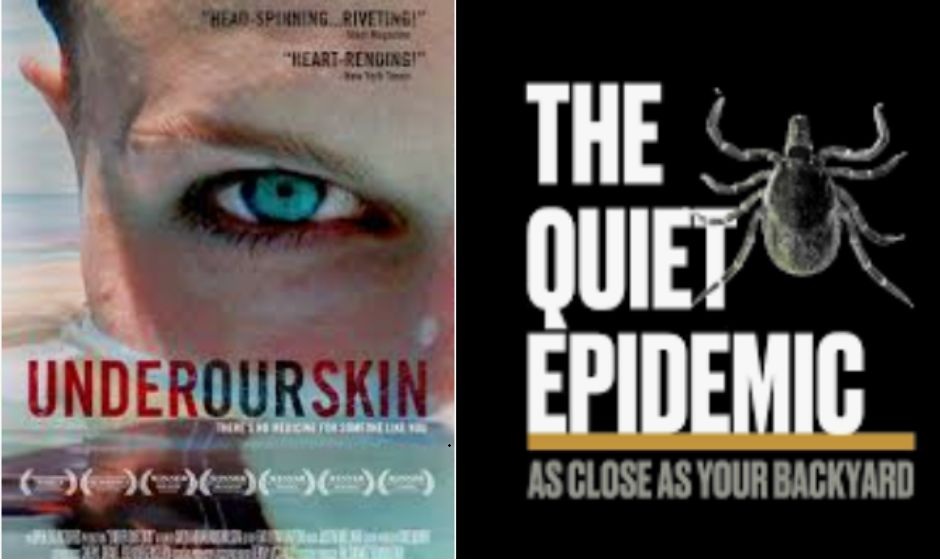
Under Our Skin (2008) was the first film to bring the Lyme crisis into national view. At a time when Lyme disease was largely ignored by the medical establishment—and just about everybody else—the documentary broke open the conversation by exposing the medical, political, and human struggles surrounding the illness. The film follows patients living with life‑altering symptoms, doctors who risk their careers to treat them, and the fierce debate over how Lyme should be diagnosed, defined, and treated.
As the first wide‑impact Lyme documentary, Under Our Skin sparked hundreds of community screenings across the country. These showings—in libraries, universities, town halls, and even private homes — helped galvanize a fragmented patient community into a more unified movement. For many suffering people, it was the first time they saw their own experience reflected on screen. (Prime, Plex, Pluto TV)
Emergence: Under Our Skin 2
Emergence: Under Our Skin 2 (2014) revisits several of the original film’s patients years later, showing who improved, who continued to struggle, and how the broader movement evolved. The focus shifts from exposing a crisis to highlighting resilience, recovery, and the growing strength of the Lyme community. (Apple TV, Plex, Prime)
The Quiet Epidemic
The Quiet Epidemic (2022) picks up the Lyme story 14 years after Under Our Skin, revealing how little had changed in that time. Following teen patient Julia Bruzzese and the late Dr. Neil Spector, the film uncovers newly surfaced evidence and a long‑buried history that helps explain why the crisis persists. It’s a powerful look at how a public‑health emergency can continue to grow long after the alarm has been sounded.
The film has also become an important educational tool. It has been screened for members of Congress and other policymakers, helping to raise awareness at the federal level and push the conversation about Lyme disease into more arenas where change can happen. (Apple TV, Prime)
I’m Not Crazy, I’m Sick
I’m Not Crazy, I’m Sick (2023) focuses less on the politics or history of Lyme disease and more on the emotional, psychological and financial fallout of being dismissed by the medical system. Following three diverse families and WNBA star Elena Delle Donne, the film captures their battles with severe illness, disbelief, and the fight to survive. It highlights the stigma, isolation, and struggle to be taken seriously that so often accompany chronic Lyme and related conditions. (Apple TV, Prime)
Skin Deep: The Battle Over Morgellons
Skin Deep: The Battle Over Morgellons (2022) explores a Lyme-related condition where people report painful skin sores, strange fibers emerging from the skin, and a range of exhausting symptoms. Many doctors dismiss it as psychological, but the film follows patients and researchers who argue there’s more to the story. It’s ultimately about the human cost of not being believed and the scientific gray zones where medicine struggles to agree on what’s real. (Prime, Roku)
The Red Ring
The Red Ring (2023) follows Finnish filmmaker Joonas Berghäll, who becomes mysteriously ill after a shoot in Kenya and spends years searching for answers. Once finally diagnosed with Lyme disease and multiple co‑infections, he documents his journey across countries, speaking with patients and experts and repeatedly pressing the World Health Organization for action. The film expands from his personal struggle into a global look at why Lyme is so often dismissed and why so many patients are left without proper care. ( Apple TV, Prime.)
Your Labs Are Normal
Your Labs Are Normal (2021) is a narrative feature by writer‑director Rhisa Perera, inspired by her own years of debilitating, undiagnosed Lyme disease. It follows a Black Puerto Rican woman in New York City whose worsening symptoms are repeatedly dismissed with the phrase “your labs are normal.” Through dramatized scenes based on Perera’s lived experience, the film highlights medical gaslighting, the emotional toll of not being believed, and how easily patients with complex illnesses can be overlooked. (Free on YouTube.)
TOUCHED BY LYME is written by Dorothy Kupcha Leland, President of LymeDisease.org. She is co-author of Finding Resilience: A Teen’s Journey Through Lyme Disease and of When Your Child Has Lyme Disease: A Parent’s Survival Guide. Contact her at dleland@lymedisease.org.



We invite you to comment on our Facebook page.
Visit LymeDisease.org Facebook Page