







PODCAST: Two advocates share the truth behind their long road to healing
By Fred Diamond
For people living with Lyme disease, the journey is often laden with enduring years of uncertainty, loss, and isolation often while appearing “fine” to the outside world. It may be about learning to advocate for yourself when the medical system fails to provide clear answers.
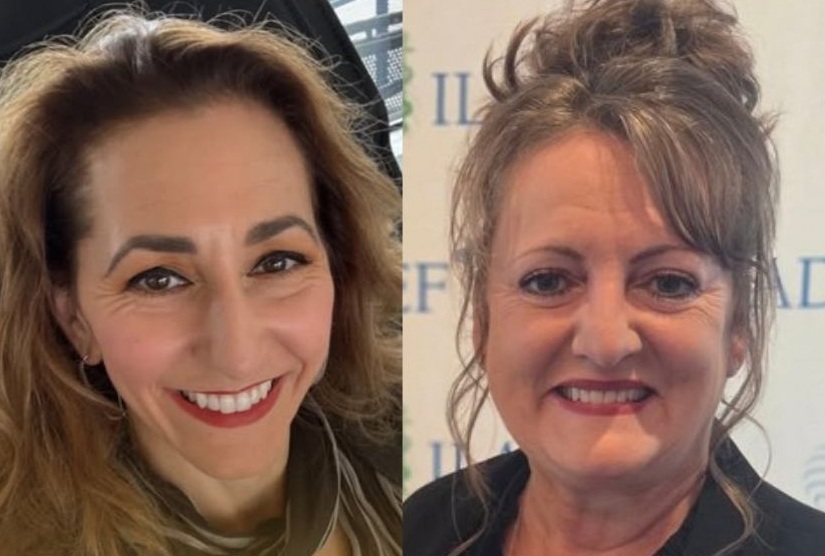
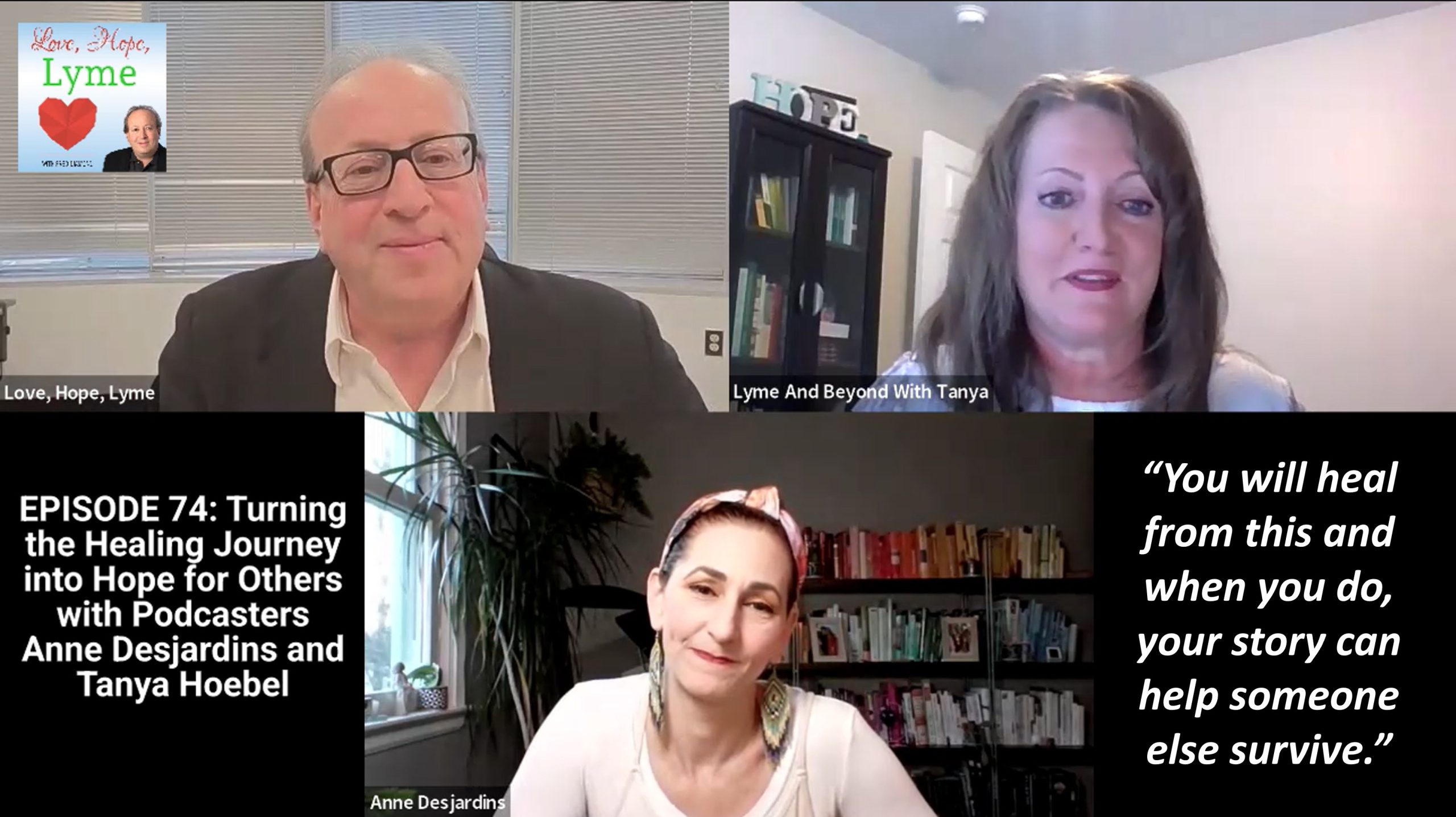
These themes came together in this week’s episode of the Love, Hope, Lyme podcast. It features two longtime Lyme advocates and fellow podcasters: Anne Desjardins and Tanya Hoebel.
Both women spent years undiagnosed, dismissed, and struggling to hold their lives together while fighting a disease few around them understood. Today, they use their voices to help others feel less alone, and to offer practical guidance rooted in lived experience.
Validation after years of doubt
Anne Desjardins lived with misdiagnosed Lyme disease and tick-borne infections for at least seven years. Like many patients, she was repeatedly told her symptoms were psychological.
“Getting my diagnosis was honestly one of the best days of my life,” Anne shared. “It was like, I’m not crazy!”
That validation marked a turning point. Years of being doubted had taken a heavy emotional toll, eventually leading Anne to give up on seeking help for a time. But her intuition told her something was deeply wrong, and she ultimately returned to advocating for herself.
Through Lyme-literate care, holistic approaches, and education, Anne slowly rebuilt her health. She later became an Ayurvedic practitioner and a prevention educator, and today hosts The Silver Lyming podcast, where she focuses on healing, resilience, and growth.
Hot yoga
One unexpected tool in Anne’s recovery was hot yoga. Early on, she struggled simply to remain in the room, often overwhelmed by emotion.
“I learned that what I was experiencing wasn’t weakness. It was trauma release,” she said.
Over time, consistent exposure to heat, breath, and gentle movement helped her regulate her nervous system and reconnect with her body. Anne later learned that hyperthermia is sometimes used internationally as part of Lyme treatment, reinforcing what she had experienced firsthand.
“Healing wasn’t just about killing bacteria,” she explained. “It was about rebuilding trust with my body.”
Anne is careful to note that healing looks different for everyone. Not all patients can tolerate movement or heat, but she believes there are always small, individualized steps that can support recovery.
Thirteen years to reclaim her life
Tanya Hoebel’s Lyme journey lasted thirteen years: seven years undiagnosed and six years in treatment. The personal cost was profound, including the loss of her home, business, and financial security.
Even more devastating was the emotional impact of being dismissed by doctors while her health deteriorated.
“I became suicidal,” Tanya shares. “I was so sick and being told it was all in my head made me feel hopeless.”
Today, Tanya speaks openly about mental health and suicide risk in the Lyme community, believing that honesty can save lives. Her experiences led her to advocacy work, online support communities, and eventually to hosting Lyme and Beyond with Tanya, where she focuses on education, nervous system support, and hope.
Why regulating the nervous system matters
One of Tanya’s central messages is that healing Lyme disease requires more than antimicrobial treatment.
“Chronic illness completely dysregulates the nervous system,” she said. “If you don’t address that, healing often stalls.”
She emphasizes accessible, low-cost tools such as breath work, sound therapy, humming, vagus nerve stimulation, and sleep hygiene. These practices, she explains, help move the body out of constant fight-or-flight and into a state where healing can occur.
“My biggest breakthrough was sleep,” Tanya notes. “We cannot heal without rest.”
She stresses that these approaches are not substitutes for medical care, but essential complements especially for patients with limited access to Lyme-literate providers.
Becoming your own best advocate
Despite different healing paths, Anne and Tanya strongly agree on one foundational truth: patients must advocate for themselves.
“No one is going to fight for you better than you can,” Anne says. “You live in your body. You know when something is wrong.”
Tanya adds that mindset plays a powerful role in recovery.
“If you go into this journey believing you’ll never get better, that belief becomes a prison,” she says.
Both encourage patients to avoid comparison, limit fear-based information, and listen carefully to their own bodies while seeking credible support.
Sharing hard-won wisdom to help others heal
Neither woman planned to become a public voice in the Lyme community. They stepped forward because they survived and because others were still searching for answers.
“Not everything about this illness is bad,” Anne says. “It changed my life in ways I never expected.”
Tanya echoes that sentiment, emphasizing the power of shared experience. “Your voice matters. When you’re ready, sharing your story can help someone else keep going.”
For people newly diagnosed or still searching for clarity, the message from Anne Desjardins and Tanya Hoebel is both realistic and compassionate: healing is complex, progress is not linear, and hope is essential.
“You are not alone,” Tanya emphasizes. “Your life matters.”
Anne adds, “You can choose to make this the worst experience of your life or one of the most meaningful.”
Click here to listen to all episodes of the Love, Hope, Lyme Podcast or click below to watch on YouTube.
Fred Diamond is based in Fairfax, Virginia. His popular book, “Love, Hope, Lyme: What Family Members, Partners, and Friends Who Love a Chronic Lyme Survivor Need to Know” is available on Amazon. The e-version (pdf) of the book is always free to Lyme survivors. PM Fred on Facebook or LinkedIn for your copy.




We invite you to comment on our Facebook page.
Visit LymeDisease.org Facebook Page