








PODCAST: The spiritual side of healing from chronic Lyme
By Fred Diamond
For many people living with chronic Lyme disease, healing is not a straight line. It is not just about lab results, protocols, or symptom checklists. It is often a deeply personal journey that touches identity, purpose, relationships, and possibly even life’s meaning itself.
For some, this journey becomes spiritual, maybe not in a religious sense necessarily, but in a way that asks fundamental questions: How do I live fully, even with limitations? Who am I now? What still matters?
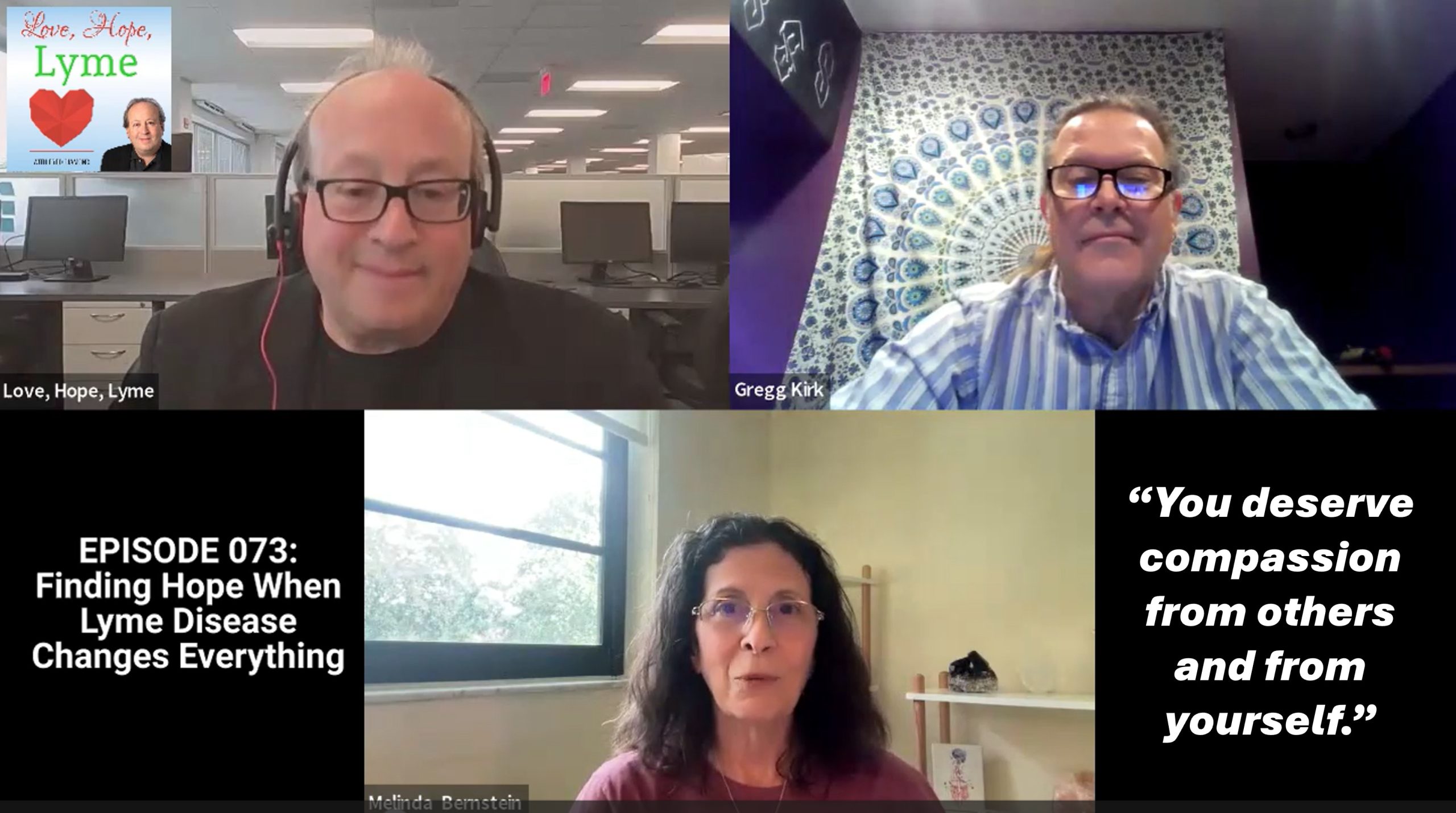
These questions are at the heart of this episode of the Love, Hope, Lyme podcast featuring Gregg Kirk and Melinda Bernstein, two returning guests whose work sits at the intersection of chronic illness, resilience, and spiritual growth.
Both Gregg and Melinda have walked alongside people facing profound health challenges. Gregg is the author of The Gratitude Curve and Your Love Will Make the Difference, a new memoir that explores healing through service, presence, and love.
Melinda, a rabbi and spiritual counselor, has spent years helping individuals navigate illness, grief, and uncertainty with compassion and clarity. Together, they offer a powerful message: while Lyme disease may change the body, it does not have to diminish meaning, connection, or inner strength.
Chronic Lyme and the loss of the life you expected
Many survivors have shared with me that one of the most painful aspects of chronic Lyme disease is the loss of the life they had once imagined. Careers are interrupted. Relationships are strained. Independence can vanish seemingly overnight.
Melinda speaks candidly about this sense of loss. Chronic illness, she notes, often forces people to grieve a future that no longer looks like what they had expected. “There is real grief in this,” she explains. “And it deserves to be honored, not rushed past or minimized.”
Too often, people with Lyme are encouraged, either implicitly or explicitly, to “stay positive” or “push through.” While optimism can be helpful, Gregg emphasizes that bypassing grief can be harmful.
“You can’t heal what you refuse to feel,” he says. “Acknowledging loss is not weakness. It’s the beginning of honesty.”
This acknowledgment is particularly important for Lyme patients, many of whom spend years being dismissed or misunderstood. The emotional toll of not being believed compounds the physical illness. Spiritual work, as Gregg and Melinda describe it, begins by validating one’s own experience without judgment.
The role of spirituality in healing
Both guests are clear: spirituality is not a substitute for medical care. Lyme disease requires knowledgeable clinicians, appropriate treatment, and ongoing medical support. But spirituality can play a powerful complementary role.
Gregg describes spirituality as “how we relate to what’s happening, not how we escape it.” For him, healing came not from trying to force his body back to who it used to be, but from learning how to live with compassion toward himself as he was.
“Spiritual healing,” Gregg shares, “is about asking, ‘How can I be fully present in this moment, even when it’s painful?’ That presence changes everything.”
Melinda echoes this idea, explaining that spiritual practices, whether prayer, meditation, reflection, or guided conversation, can help people reconnect with a sense of agency.
“Illness takes away so much control,” she says. “Spiritual work gives people a place where they still have choice: how they respond, how they treat themselves, how they relate to others.”
Gratitude without toxic positivity
Gratitude is often misunderstood in the context of chronic illness. Patients may hear well-meaning advice to “just be grateful,” which can feel dismissive or even cruel when someone is suffering.
Gregg addresses this directly, drawing from his concept in his first book The Gratitude Curve.
Gratitude, he explains, is not about pretending things are fine. It is about noticing moments of meaning, connection, or beauty alongside the pain.
“Gratitude doesn’t erase suffering,” Gregg says. “It coexists with it.”
For Lyme survivors, this might mean appreciating a good hour on a bad day, a supportive message from a friend, or simply the strength it took to get through the morning. Melinda adds that gratitude can be especially powerful when it is directed inward.
“Many people with chronic illness are incredibly hard on themselves,” she says. “Learning to appreciate your own resilience is a spiritual practice in itself.”
Love as a healing force
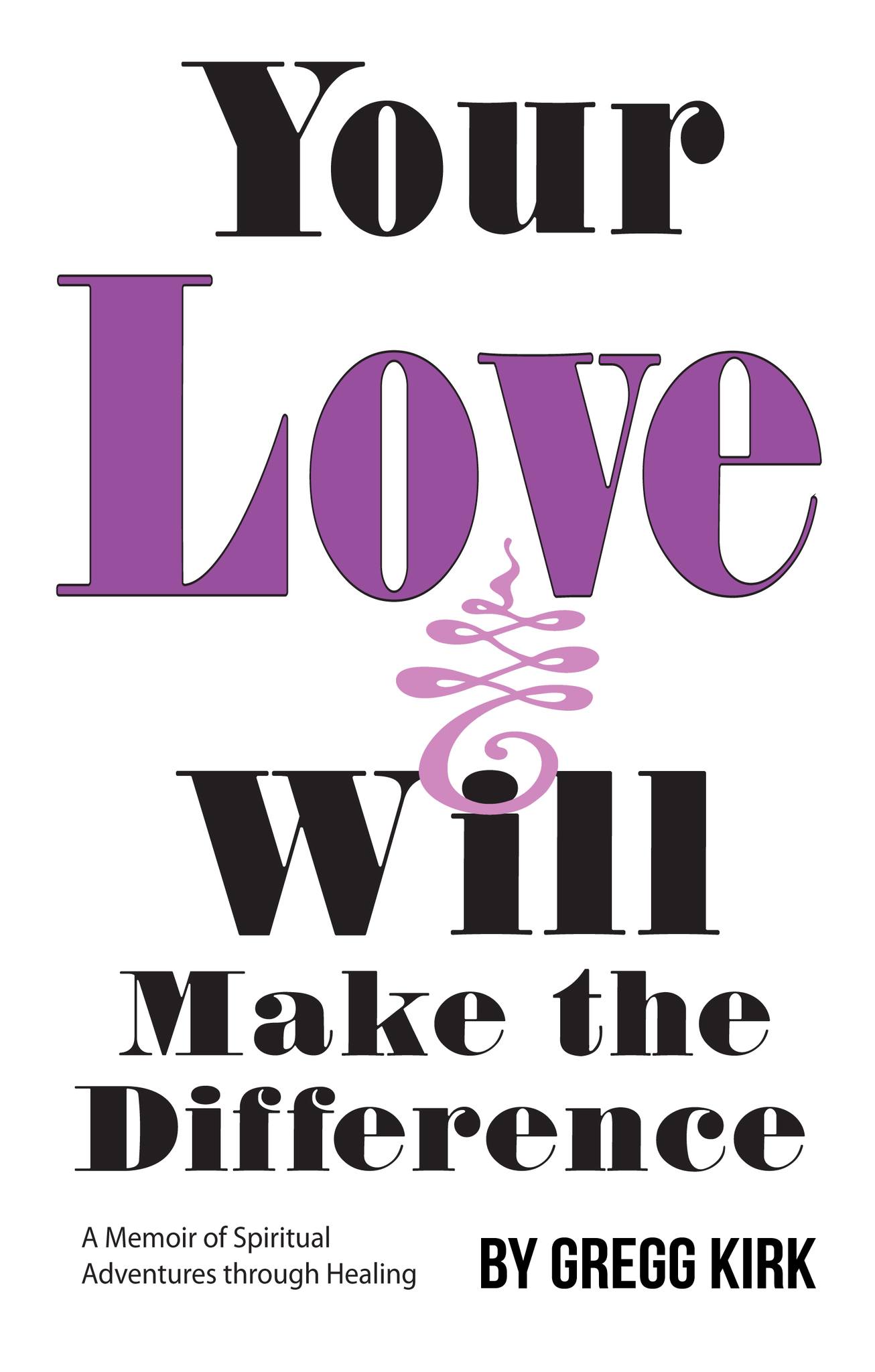 Gregg’s new memoir, Your Love Will Make the Difference, is rooted in the belief that showing up for others, even while unwell, can be profoundly healing.
Importantly, this does not mean overextending or ignoring one’s limits. Instead, Gregg speaks about appropriate service: small, meaningful acts that align with one’s capacity.
“You don’t have to save the world,” he says. “Sometimes love looks like listening. Sometimes it looks like being honest about what you can and cannot do.”
For Lyme patients who feel isolated, reframing connection as something flexible and accessible can be liberating. Love does not require constant energy. It requires authenticity.
Melinda emphasizes that love must also be directed inward. “Self-compassion is not optional in chronic illness,” she says. “It’s essential.”
Many patients, she noted, feel guilty for resting or setting boundaries. Spiritual counseling can help reframe rest not as failure, but as wisdom.
Finding Meaning When the Path Changes
Perhaps the most hopeful message from the conversation was this: meaning evolves and does not disappear when life changes.
Both Gregg and Melinda share stories of individuals who discovered new purpose through their illness: advocacy, creative expression, deeper relationships, or spiritual leadership. While no one would choose Lyme disease, many find that it reshapes their values in unexpected ways.
“Meaning isn’t something you wait for after healing,” Gregg says. “It’s something you build during the journey.”
For some, this means helping others navigate similar challenges. For others, it means redefining success, slowing down, or learning to live more intentionally. Melinda notes that spirituality often helps people move from the question “Why is this happening to me?” to “Who am I becoming through this?”
A Message to the Lyme Community
Both guests offer words of encouragement to those still struggling.
“You are not broken,” Melinda says. “You are responding to something very hard. And you deserve compassion from others and from yourself.”
Gregg adds, “Your story is not over. Even if the path looks nothing like what you imagined, there is still room for love, meaning, and connection.”
Healing is not always about cure. Sometimes, it is about learning how to live with dignity, purpose, and hope during uncertainty.
Chronic Lyme disease challenges every aspect of a person’s life. Medical treatment is critical, but it is often not enough to address the emotional and existential weight of the illness. Conversations like this one remind us that healing is multifaceted.
Click here to listen to all episodes of the Love, Hope, Lyme Podcast or on YouTube.
Fred Diamond is based in Fairfax, Virginia. His popular book, “Love, Hope, Lyme: What Family Members, Partners, and Friends Who Love a Chronic Lyme Survivor Need to Know” is available on Amazon. The e-version (pdf) of the book is always free to Lyme survivors. PM Fred on Facebook or LinkedIn for your copy.




We invite you to comment on our Facebook page.
Visit LymeDisease.org Facebook Page