










PODCAST: “Doesn’t It Kill You?” — the Lyme lyric that stops a room cold
By Fred Diamond
If you’ve ever struggled to explain what chronic Lyme disease really feels like with the confusion, the disappearing health, the disbelief from doctors and even people close to you, you’ll understand exactly why Lyme survivor and advocate (Generation Lyme) Jesse Ruben wrote the song “Monster.”
He wrote it in the middle of his own crisis, at 4:45 a.m., when his symptoms made no sense and no one could tell him what was happening. He was trying to put words to an experience the medical system still fails to recognize.
Today the song has become a point of recognition for Lyme survivors everywhere.
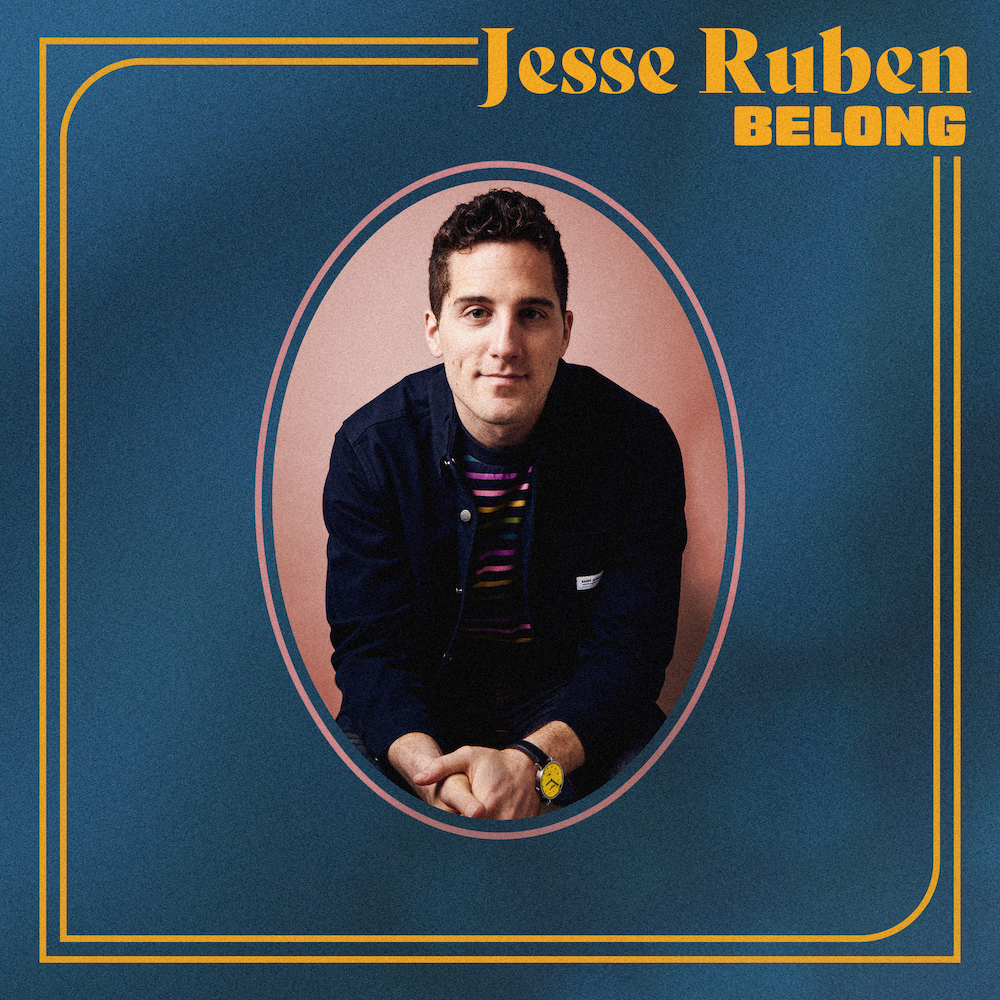
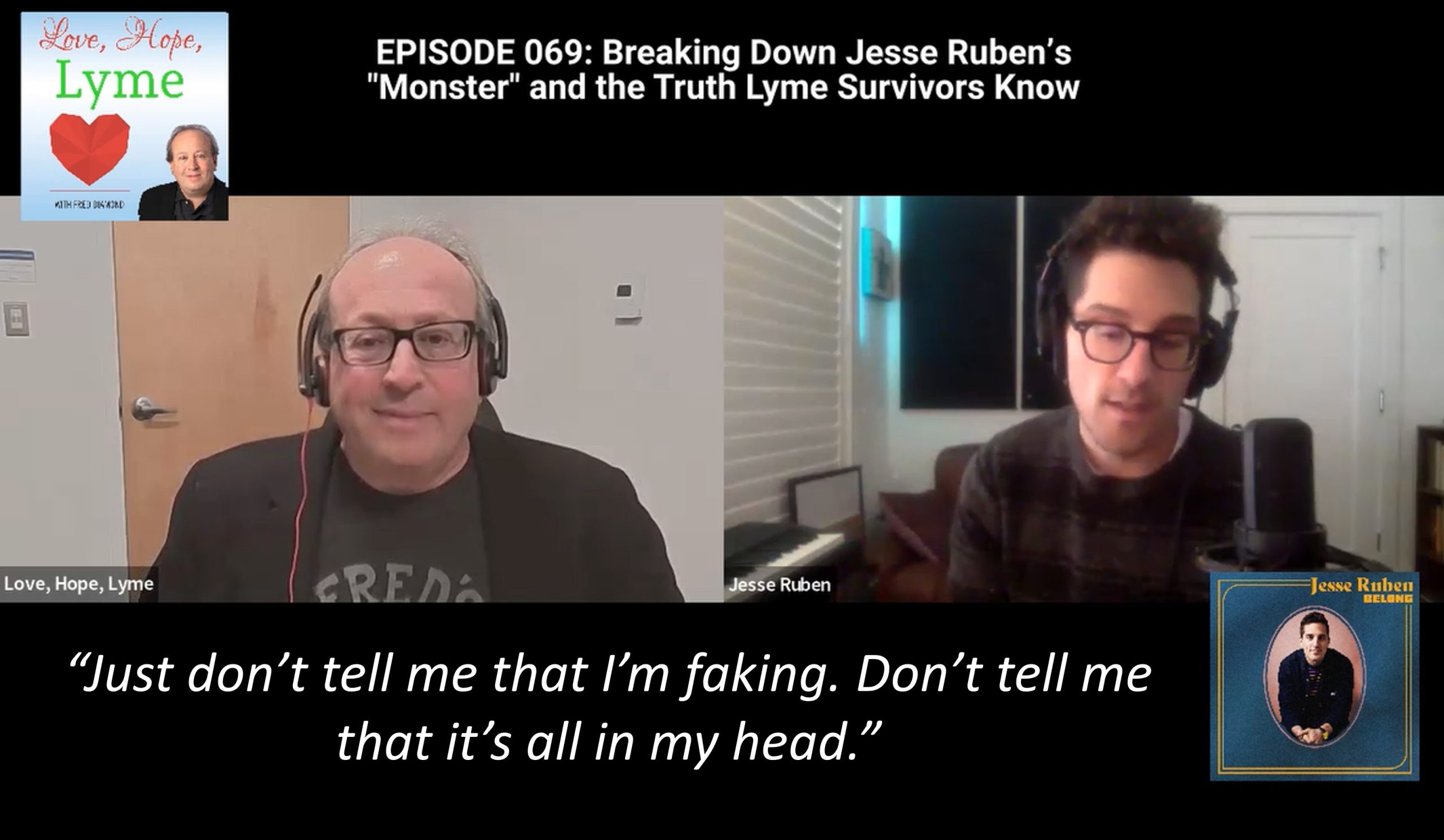
In this week’s Love, Hope, Lyme podcast episode, Jesse and I walked through the song line by line and discussed what he was living through, why he chose certain phrases, and why so many patients hear their own story in it. The conversation wasn’t about making music. It was about naming a reality millions of people are still trying to get others to understand.
It’s a heartbreaking song and at the same time, remarkable.
A second battle and a long road back
When we recorded the interview in October 2025, Jesse was speaking from his new home in Atlanta. He and his wife moved there for her acting career. It looks like a fresh start, and in many ways it is, but he’s arriving there after a second major bout with Lyme.
“I’m finally getting back to remission again,” he said. “When you saw me in 2023, I was a mess.” I first met him when I interviewed him and two colleagues at Generation Lyme.
Performing now, healthier and more grounded, gives him the ability to sing “Monster” with the weight the audience can feel immediately. I shared a post of him performing it live this summer and the post became one of the most shared clips I’ve ever released, and I understand why. People didn’t need context. They recognized the emotion before the first line.
The first verse: When everything starts to break down
The opening of “Monster” captures the moment most Lyme survivors know too well: something is very wrong, but no one can tell you what it is.
“Something’s wrong here, doctor, and I don’t know what it is.
But there’s a monster in my body, and it’s living in my limbs…”
Jesse saw 16 doctors in nine months. Many Lyme survivors have seen far more. He was told he was depressed, unfit, anxious, imagining symptoms. He remembers telling his lifelong doctor, “You don’t understand. I’m going to die.”
The repeated line “I was a young and healthy man” hits because it’s straightforward. It’s grief without fanfare. It’s the life you had, gone.
Many Lyme survivors can relate to the loss. Loss of health, relationships, livelihood.
The second verse: Doing whatever it takes
The middle section goes deeper into the grind of survival:
“I’ll do anything it takes. I’ll light myself on fire.”
He’s not exaggerating.
“If someone had told me kerosene and a match would cure me 100%,” Jesse said, “I would’ve said, ‘Hand me the match.’”
Anyone who has lived with chronic Lyme understands that sentence immediately. It’s not about danger. It’s about the terror of no relief.
Patients:
- Swallow 60–100 pills a day
- Try protocols few people have heard of
- Chase small improvements
- Burn through savings on treatments that might help
Jesse put it simply: “If I do nothing, there’s no chance. If I try everything, maybe one thing will help.”
That mindset keeps patients alive.
The final verse: The line that stops a room cold
This is the verse that always lands hardest. He keeps repeating the line:
“Doesn’t it kill you?
Why doesn’t it kill you to see me this way?”
When Jesse performed this live, I saw the reaction. The air changes.
During his illness, he divided people into two groups:
- Those who understood immediately
- Everyone else
For the second group, he had one private thought:
If you spent five seconds in my body, you’d be ashamed you ever doubted me.
The line about being seen “this way” speaks to every patient who has watched relationships strain under something no one planned for, and few understand. And to the partners and caregivers who stayed, even when it was crushing.
Why “Monster” matters
I was a DJ after college and love music. Most songs about illness soften the edges. “Monster” doesn’t.
It’s not written to inspire or uplift. It’s written to tell the truth.
- It validates what patients experience.
- It captures the isolation many can’t put into words.
- It tells the story straight, without apology.
And at each concert, Jesse is educating people who may not think about Lyme disease at all. He’s turning something invisible into something impossible to ignore.
Where Jesse is now
Jesse is healthier than he’s been in years. He’s touring, writing, and supporting the community through Generation Lyme. He has a backlog of new music. He’s building the parts of life Lyme temporarily derailed including his marriage, his mental health, his sense of what’s possible.
“I know the people who connect with what I’m doing,” he said. “Those are the people I’m trying to help.”
If you’d like to support Jesse’s work or get a physical copy of the album — which helps him far more than streaming — visit jesseruben.com.
And if “Monster” puts words to something you’ve never been able to explain, share it with the person who needs to hear it.
Sometimes music tells the truth faster than anything else.
Watch the interview on YouTube as he performs the song.
Click here to listen to all episodes of the Love, Hope, Lyme Podcast or on YouTube.
Fred Diamond is based in Fairfax, Virginia. His popular book, “Love, Hope, Lyme: What Family Members, Partners, and Friends Who Love a Chronic Lyme Survivor Need to Know” is available on Amazon. The e-version (pdf) of the book is always free to Lyme survivors. PM Fred on Facebook or LinkedIn for your copy.





We invite you to comment on our Facebook page.
Visit LymeDisease.org Facebook Page