










Pennsylvania leads the nation in Lyme. Here’s how advocates are fighting back.
By Fred Diamond
Pennsylvania has quietly become one of the epicenters of the Lyme disease epidemic in the United States. For more than a decade, the state has reported some of the highest numbers of diagnosed cases in the country.
Behind those statistics are thousands of families navigating misdiagnosis, delayed treatment, financial strain, and the emotional toll of chronic illness.
Two of the people working tirelessly to change that reality, Eric Huck and Amy Tiehel of the Pennsylvania Lyme Resource Network, discuss their work and their personal journeys on today’s Love, Hope, Lyme podcast.
We discuss the scale of the Lyme epidemic in Pennsylvania, the barriers patients face in diagnosis and treatment, and the critical importance of community support for those living with tick-borne disease.
Both became advocates after their own devastating experiences with Lyme disease and the healthcare system. They share how advocacy, education, and community support are helping patients and families across Pennsylvania.

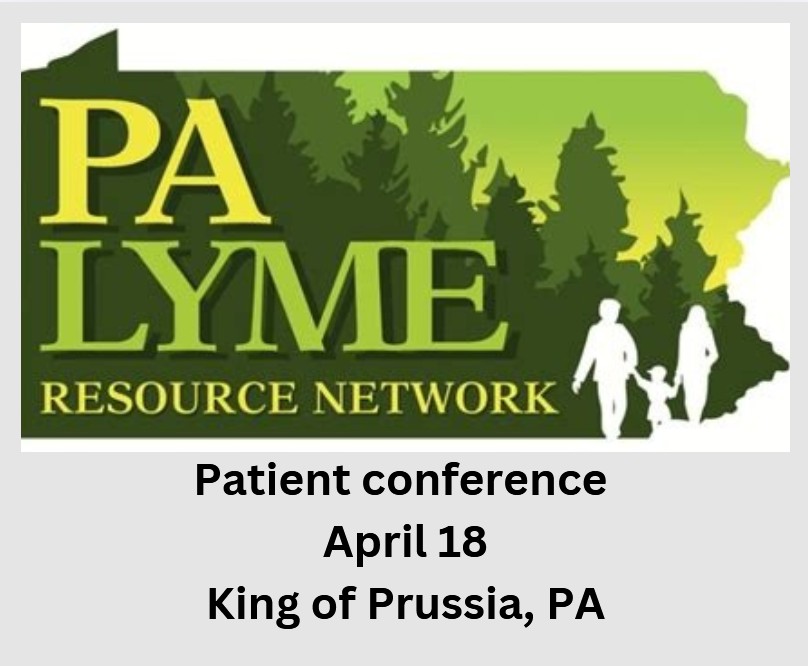
The PA Lyme Patient Conference, a day filled with Lyme education, insights, and connections, will take place on April 18 in King of Prussia, PA.
Their message to Lyme survivors is clear: Lyme disease in Pennsylvania is a growing crisis but education, advocacy, and connection can help patients navigate the challenges.
Pennsylvania has become ground zero for Lyme disease
For Eric, the journey began in 2009 after getting a tick bite while hiking the Appalachian Trail. Within months, his health collapsed.
“I went from thinking everything was fine to being unable to get out of bed,” Huck recalls. “The joint pain, the muscle pain, the chronic fatigue were overwhelming.”
Despite receiving preventive antibiotics, his symptoms spiraled. He later discovered that he had been infected not only with Lyme disease but with multiple co-infections, including babesiosis, bartonellosis, ehrlichiosis, anaplasmosis, and tick-borne relapsing fever.
Like many Lyme patients, Eric encountered a confusing and often dismissive healthcare system before receiving proper treatment.
That experience ultimately led him into advocacy. Today, he serves as president and co-founder of the Pennsylvania Lyme Resource Network, one of the largest volunteer-led Lyme advocacy organizations in the country.
The statistics behind the organization’s work are striking.
PA leads nation in Lyme cases
“For 10 of the last 13 years, Pennsylvania has been the number one state in the country for Lyme disease. It’s an epidemic,” he says. “Pennsylvania accounts for roughly 22 percent of Lyme disease cases reported in the United States over the past decade.”
Every county in the state has confirmed tick populations, and estimates suggest the true number of infections may exceed 100,000 annually. Children are particularly vulnerable. About one-quarter of Lyme diagnoses occur in children between the ages of five and fourteen.
“That’s roughly 68 children a day in Pennsylvania getting Lyme disease.”
Several environmental factors contribute to the state’s high numbers, according to Amy Tiehel, founder of the Delaware County Lyme Disease Support Group and regional leader for PA Lyme.
“Pennsylvania’s climate and geography provide ideal conditions for ticks. Dense forests, suburban expansion into wooded areas, large rodent populations, and high deer density all contribute to the spread of tick-borne disease,” she says.
“We have thousands of acres of humid, shaded forest, and ticks thrive in moisture,” she explains. “But people don’t have to be in the woods to get bitten. Many people are bitten right in their own backyards.”
Climate change is also extending tick activity. Warmer winters allow ticks to remain active longer and expand into new regions. Together, these factors have helped fuel what many advocates consider a public health crisis.
Major barriers to diagnosis and treatment
Despite the scale of the epidemic, many Lyme patients continue to struggle to obtain accurate diagnosis and appropriate care. Amy experienced this firsthand. Her symptoms began in 2008 while she was living in Los Angeles. At first, the illness appeared cyclical, striking roughly once a month.
“It literally felt like my hormones were poisoning me.”
Over time, her symptoms escalated. Eventually she developed Bell’s palsy, a facial paralysis often associated with Lyme disease. A neurologist wrongly told her that Lyme disease was not the cause.
Eventually she moved back to Pennsylvania, expecting that a state so affected by Lyme disease would offer clearer answers. Instead, the search for diagnosis continued.
“It took me two years and 25 doctors to finally get diagnosed. By that point my body was shutting down,” she says.
By the time she was diagnosed with Lyme disease and Babesia, her health had deteriorated significantly. Stories like hers are all too common. According to Eric, one of the biggest barriers patients face is the lack of Lyme-literate healthcare providers.
“There are two sets of national guidelines for Lyme disease,” he explains. “The older guidelines and the more current guidelines developed by the International Lyme and Associated Diseases Society. Many physicians continue to rely solely on older recommendations that limit treatment duration and dismiss persistent symptoms.”
Problematic testing
Testing remains another major challenge. Standard tests such as ELISA and Western blot frequently miss infections, particularly in early or chronic stages of disease.
“Many Lyme tests are so unreliable that a negative result doesn’t rule out Lyme. For patients, it can feel like flipping a coin with your health,” he says.
Insurance coverage presents another hurdle. Long-term treatment protocols are often denied or labeled experimental, forcing patients to pay out-of-pocket for medications and care. For families already coping with debilitating illness, these barriers can be overwhelming.
Community and advocacy are lifelines
In response to these challenges, the Pennsylvania Lyme Resource Network has built a strong support system for patients and families. The organization operates more than 20 volunteer-led support groups across the state, helping patients connect with resources, referrals, and knowledgeable healthcare providers.
Last year alone, the group conducted more than 800 referrals to Lyme-literate practitioners.
“We consider ourselves a resource network,” Eric says. “We’re a resource to patients, families, doctors, agencies, and organizations.”
Education is another core part of the organization’s mission. Amy helps lead the Dare 2B Tick Aware program, a statewide initiative focused on prevention and public education. Since its launch in 2017, the program has delivered hundreds of presentations to community groups, schools, outdoor workers, and public agencies. The program focuses heavily on prevention strategies, tick behavior, and awareness of co-infections.
“What we consistently hear is that people don’t know the basics,” she says. “They don’t know prevention, they don’t know about co-infections, and they don’t understand tick behavior.”
Perhaps most important, however, is the emotional support these networks provide. Lyme disease can take a devastating toll on families.
“We see families where a parent has Lyme and multiple children have Lyme. The physical, emotional, and financial toll can be devastating,” she said.
Isolation and disbelief
Isolation and disbelief from the medical community often make the experience even harder. She encourages patients to reach out for support.
“Don’t try to navigate Lyme disease alone. Connecting with other patients can make the difference between despair and hope.”
The path forward
Advocates believe meaningful progress in Pennsylvania will require greater education for healthcare providers and broader recognition of the evolving science surrounding Lyme disease.
Earlier diagnosis and treatment remain the most important steps to preventing chronic illness. Until those changes occur, organizations like the Pennsylvania Lyme Resource Network will continue working to bridge the gaps patients face.
“Our mission is simple: reduce the current and future suffering caused by Lyme disease in Pennsylvania.”
Learn more about the PA Patient Conference here.
Click here to listen to all episodes of the Love, Hope, Lyme Podcast or on YouTube.
Fred Diamond is based in Fairfax, Virginia. His popular book, “Love, Hope, Lyme: What Family Members, Partners, and Friends Who Love a Chronic Lyme Survivor Need to Know” is available on Amazon. The e-version (pdf) of the book is always free to Lyme survivors. PM Fred on Facebook or LinkedIn for your c




We invite you to comment on our Facebook page.
Visit LymeDisease.org Facebook Page