







Looking at autism through an infectious‑disease lens
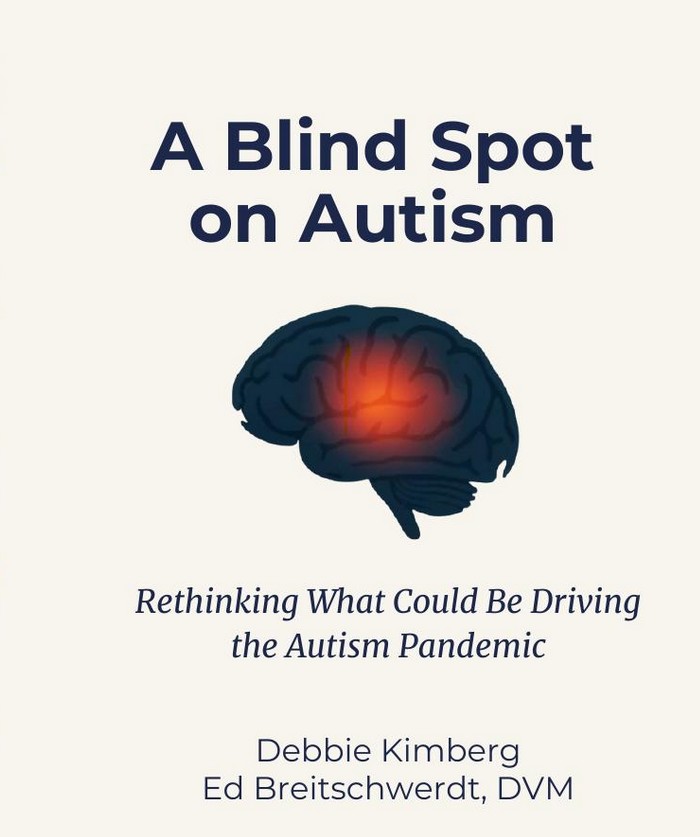
The following excerpt comes from A Blind Spot on Autism. The book is co‑authored by Debbie Kimberg, a mother and advocate whose writing for LymeDisease.org has chronicled her son’s improvement after treatment for vector‑borne infections including Borrelia, Bartonella, and Babesia. She partners with Dr. Ed Breitschwerdt, one of the world’s leading Bartonella researchers. Together, they blend lived experience and scientific expertise to explore biological patterns they believe have been overlooked in autism research.
By Debbie Kimberg and Dr. Ed Breitschwerdt
From the moment we step into a doctor’s office, we’re taught to think of health problems as separate boxes. A child’s learning issues go to a specialist for educational testing. A sibling’s anxiety is treated by a mental health professional. A parent’s autoimmune disease is managed by a rheumatologist. A grandparent’s memory loss goes to neurology.
Medicine is organized this way. Each symptom is matched with a specialty, each specialty trained to see a specific slice of the person in front of them. That’s how most of us learn to think about illness as isolated problems with separate causes. Primary care doctors and internists are trained to integrate information across systems, but the structure of modern medical care often means that symptoms are divided among different specialists. As a result, connections between organ systems may not always be apparent early on, especially when symptoms emerge in different parts of the body or different members of a family.
Functional medicine doctors take a different approach. Their training places special emphasis on cross-system interactions and chronic, multisystem illness, so they routinely look for patterns that link seemingly unrelated symptoms. When the same clusters of issues appear repeatedly across family members, the overlaps become harder to ignore.
When patterns repeat across families
A child with autism or ADHD. A sibling with Pediatric Acute-Onset Neuropsychiatric Syndrome (PANS) or anxiety. A parent with thyroid disease or chronic fatigue. A grandparent with rheumatoid arthritis and dementia. At first glance, these diagnoses seem unrelated, scattered across ages and medical categories. Yet, in family after family, the same overall patterns keep surfacing.
“I’ve lived those overlapping problems. My son had always needed significant support in school, but the extent of his social challenges didn’t fully emerge until later. At thirteen, he was finally diagnosed with autism. This was on top of what our family was already managing: one son with ADHD and anxiety, another with oppositional defiance disorder and hypersensitivities, and my own immune-mediated thyroid disease. Each condition had its own doctor, its own treatment plan, its own file folder. Yet the more I learned, the more those neat boxes began to blur.
When I began speaking with other parents, I heard the same story over and over again, stories much like my family’s. What had once looked like coincidence started to feel like a tangled and connected web.
— Debbie Kimberg, coauthor
What if these patterns reflect something happening beneath the surface, not as separate problems, but as signs of a deeper, single, biological disturbance? What if the brain, and the systems connected to it, are reacting to the same underlying spark or irritation that quietly drives symptoms in different ways across different family members? The image on the cover of this book hints at this possibility. A child’s brain that is not simply struggling but inflamed. The metaphor of a brain on fire reflects what many families instinctively sense, even when it is invisible to routine brain scans. Something seems to be burning, perhaps in a subclinical way that current detection tools are not yet sophisticated enough to reveal.
Yet, in the midst of the steepest rise in autism ever recorded, almost no one in medicine is delving deeply into why these overlapping disease entities exist among families. At the start of the 2000s, autism affected about 1 in 150 children in the United States. Today, it’s 1 in 31. That’s a 384% increase in just over two decades, and the autism curve is still climbing. The same trend is appearing in other countries, making it clear this is not just a U.S. issue.
Rethinking autism’s rapid rise
If autism were a contagious virus spreading this quickly, public health officials would have mobilized immediately. Instead, the explanations we’ve been offered, better diagnosis, genetics, and environmental toxins, have failed to bring realistic or actionable answers. These factors may contribute, but they don’t account for why so many families see a clustering of neurological, neuropsychiatric, and autoimmune-related conditions across multiple members and generations.
This book brings together two perspectives rarely combined: the lived experience of navigating these patterns as a parent and patient advocate, and the decades of research from one of the world’s leading infectious disease experts. Our goal is not to dismiss the work already done on autism, but to attempt to connect the dots between existing research that has remained scattered across a thousand scientific papers, often among different fields of study. When viewed together, these studies point toward a hypothesis that could explain both the near-exponential rise in autism cases and the convoluted web of health problems in so many families.
This is not the first time medicine has been blindsided by an invisible infectious cause. History is full of examples where an infectious trigger hid in plain sight for decades before science caught up. Syphilis was once thought to be a mysterious neurological illness, ulcers were blamed on stress, and HIV was first recognized only by its complications. Each time, the truth emerged slowly, in pieces, and often against the resistance of the medical establishment.
Connecting the dots across disciplines
Digging deep into the vast body of research that already exists and thinking critically about how it all fits together, a potential hypothesis has been overlooked for far too long. We owe it to our children and to future generations to do this hard work. Perhaps the iconic puzzle pieces so often associated with autism don’t just represent individuals on the spectrum but actually represent thousands of scientific findings that have yet to be assembled into a more unified, complete picture. The purpose of this book is to attempt to connect a set of dots that may help others understand why there may be interconnections between autism, infection, and neuroinflammation.
A hypothesis hidden in plain sight
The implications may be enormous. If correct, this hypothesis could explain not just the rise in autism, but the interwoven health struggles seen in so many families: the autoimmune disorders, the chronic fatigue, the anxiety, and the sudden-onset neuropsychiatric (PANS) conditions in children. It could explain why so many parents instinctively sense a connection between their child’s regression after illness and their other struggling children, even when they are told it’s only a coincidence.
Following this trail has meant stepping far outside the boundaries of medical specialties and into a landscape where infectious disease, neurology, psychiatry, and immunology converge. It has meant sifting through research on multiple pathogens, some barely known to the general public, and asking how they might interact in ways no one has ever studied. It has meant confronting the uncomfortable fact that these infections are far better at hiding, and far more capable of long-term damage than what society has faced in our lifetimes with acute viral infections such as influenza, SARS-CoV-2, West Nile, or Zika.
What you are about to read is the combination of scientific investigation and personal human journeys focused on autism. It is a journey through decades of research, patient accounts, and clinical patterns, all pointing to a conclusion that is as urgent as it is unsettling: Bartonella species may represent one of the most stealth and dangerous pathogens seen in generations, pathogens that have been allowed to spread silently, reshaping the health of millions without recognition.
Reprinted by permission from A Blind Spot on Autism, by Debbie Kimberg and Dr. Ed Breitschwerdt, K and B Publishing.
Debbie Kimberg is a mother, author, and advocate who writes about the link between autism and vector‑borne infections. Dr. Ed Breitschwerdt is a veterinarian and infectious disease researcher known internationally for his pioneering work on Bartonella. A professor at North Carolina State University, he is widely regarded as a leading expert on vector‑borne pathogens.
Click here for ordering information for A Blind Spot on Autism.
The book will be released on Amazon in hardcover, paperback, and Kindle on 1/13/2026, and audio book later in January. Soon it will be available in all formats wherever you shop for books.


We invite you to comment on our Facebook page.
Visit LymeDisease.org Facebook Page