







PODCAST: Lyme, dementia, and the fight to reframe Alzheimer’s
By Fred Diamond
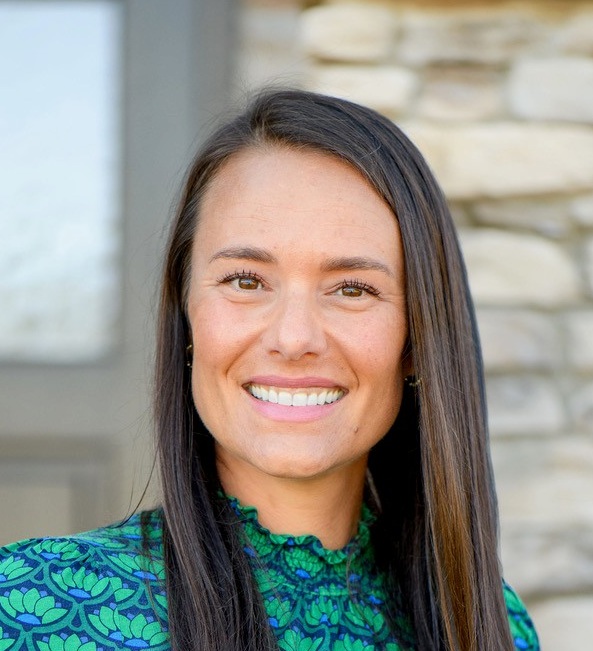
The amount of research being done connecting Lyme disease to dementia or Alzheimer’s has been increasing. Nikki Schultek, a researcher, advocate, and chronic Lyme survivor, believes that connection may be far more significant than the medical community has acknowledged.
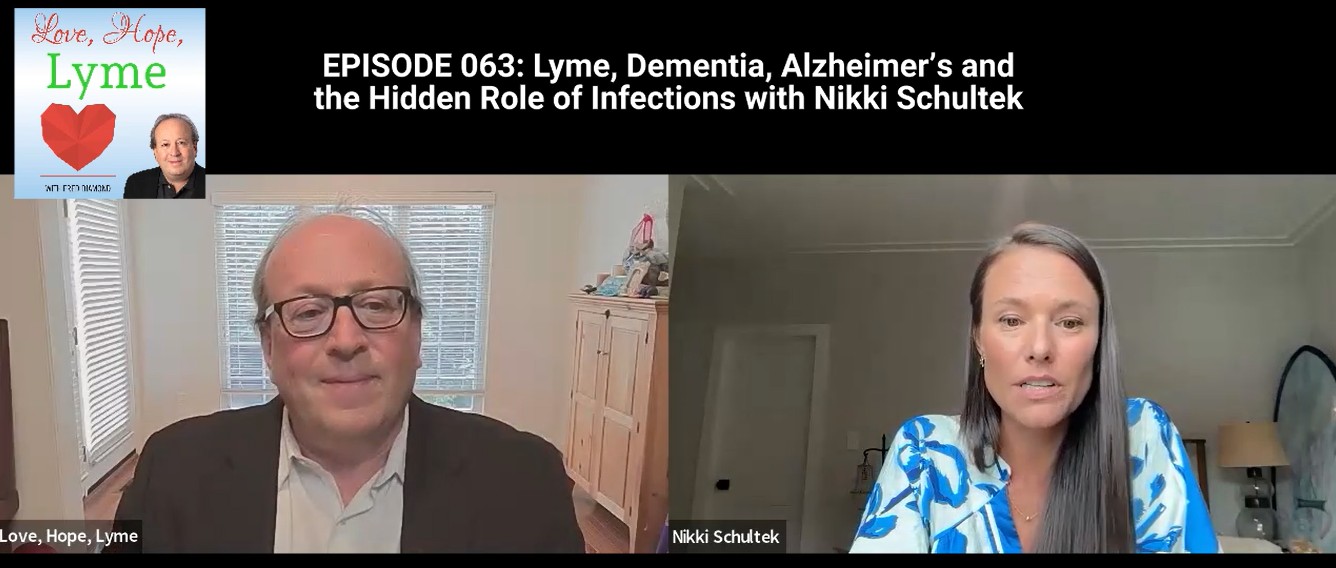
Nikki recently appeared on my Love, Hope, Lyme podcast to share her personal journey and her groundbreaking work. She is the co-founder and executive director of The Alzheimer’s Pathobiome Initiative (AlzPI), founder of Intracell Research Group, and founding director of the new Pathobiome Research Center at the Philadelphia College of Osteopathic Medicine.
Nikki is, as she puts it, a “collaboration architect,” bringing together scientists from different domains to investigate one critical question: Can chronic infections, including Lyme disease, trigger or accelerate Alzheimer’s disease and other dementias?
A personal battle with chronic infection
Like many Lyme treatment advocates, her work began when she became ill.
“My own experience with chronic infection began in my early 30s,” she says. “I had Lyme and other tick-borne co-infections, and I also had a chronic respiratory infection called chlamydia pneumoniae.”
Her symptoms were wide-ranging and included bladder pain, asthma, fatigue, arrhythmia, memory issues, cognitive changes, and joint pain. Doctors provided diagnoses often around autoimmune conditions but had no answers.
“I was, like a lot of Lyme patients, hopping around from one specialist to the next,” she says. “They were just stating descriptions of my pain and discomfort. They weren’t answers as to the root of what was causing it.”
When a neurologist told her she might have multiple sclerosis, Schultek was devastated. “What really was sickening was the idea that I couldn’t watch my kids grow up because I would be slowly robbed of my neurologic function or robbed of that which makes me who I am, my brain, my personality, my wellbeing. My kids were only three and five when all this happened.”
Her MRI showed no lesions, but no physician suggested infections as a possible cause. It wasn’t until Nikki searched on her own, by linking her bladder pain disorder to asthma, that she discovered the work of Dr. Charles Stratton at Vanderbilt University. His research suggested that certain infections, like chlamydia pneumoniae, could hide inside immune cells, spreading throughout the body and triggering inflammation and disease.
“That idea blew my mind,” Schultek recalls. “The whole idea of autoimmunity is that your immune system is attacking you for no reason. But what if there’s an invader there (perhaps) something your immune system can’t handle because it has itself been invaded?”
With Dr. Stratton’s guidance, she pursued testing for multiple infections, including Borrelia burgdorferi and Babesia. Treatment was grueling, but ultimately, her health improved. “Nearly every condition was put in remission,” she says. “I get to be here today for my kids who are now teenagers. I get to live a mission-driven life.”
From patient to research leader
Her recovery led her to build bridges across the scientific community.
“I started Intracell Research Group in 2017 on the heels of my own experience with chronic infection,” she says. “It began as just a small group of doctors studying this chlamydia bacteria and the chronic diseases it had been linked with. Today, it’s my consultancy through which I organize research collaborations among different groups. We apply for NIH grants, philanthropy, and I essentially am the architect.”
She also co-founded AlzPI, the Alzheimer’s Pathobiome Initiative, which focuses squarely on how chronic infections affect the brain. The term pathobiome is central to her work: the collection of microbes in the body that are not just neutral passengers, but potentially harmful triggers of disease.
“Most people know the word microbiome,” Schultek explains. “The pathobiome captures a term that refers to our passengers that might be making us sick.”
Dementia, Alzheimer’s, and infections
One of Nikki’s key goals is to clarify how dementia and Alzheimer’s are defined.
“I like to describe dementia as being the umbrella over everything,” she says. “Then Alzheimer’s disease is the most common form of dementia. It’s associated with aging, but there are also younger cases like what happened with Nicole Bell’s family and her husband.” (Nicole Bell is the author of “What Lurks in the Woods” and has been featured on LymeDisease.org in the past.)
Traditional medicine often points to amyloid beta plaques and tau tangles as the villains in Alzheimer’s. But Nikki says the story may be more complex.
“Research out of Harvard and Mass General suggests that amyloid beta might actually be a defense against infection,” she notes. “It may be that what we think of as the bad guys in Alzheimer’s are actually recruited by infections.”
This perspective reframes Alzheimer’s pathology not as random malfunctions of the brain, but as immune responses gone awry.
“Some people have plaques but are not sick yet,” she emphasizes. “We want to understand what happens before those changes, what leads to the transition from being cognitively normal to developing dementia.”
And Lyme is very much part of that picture. “It is known that Borrelia burgdorferi, the bacteria that causes Lyme disease, can produce neuroborreliosis and it can produce a type of dementia. This is in medical literature. The thing that keeps me awake at night is that routinely, if someone has memory complaints, testing for Lyme is not normally on the radar for the majority of physicians.”
Building a roadmap
To push the field forward, Nikki convened a global group of experts in 2023 to publish a research roadmap in Alzheimer’s & Dementia, the world’s leading Alzheimer’s journal.
“We scoured the medical literature and found 86 case reports where infections and dementia were linked together,” she explained. “We saw Lyme, but also viral, bacterial, fungal, and parasitic infections. And in almost every case, the conclusion was the same: physicians should be screening for infections when patients have new onset cognitive issues.”
Her mission is not to argue that every case of dementia is infectious. “We are saying that we can’t turn a blind eye,” she says. “We have to pay attention to the cases that might be treatable, by simply screening.”
Case reports even show that in some patients, treating the infection improves memory scores. “Certain patients will actually regain memory function with treatment,” Schultek notes. “That should be impossible to ignore.”
Hope for Lyme patients
For Lyme survivors, the link between infections and Alzheimer’s is both frightening and hopeful. Nikki acknowledges that some fear raising the issue at all.
“People say, ‘If you suggest infections can trigger dementia, that will scare people.’ But I think the scariest thing is not knowing what’s causing your symptoms and being told, ‘We don’t have any answers for you,’” she says.
“Patients that have concerns about their memory could be screened for Lyme and co-infections. Having a Lyme-literate or chronic-infection-literate physician is essential.”
Both ILADS and LymeDisease.org offer assistance in finding physicians. Nickki stresses the importance of finding a clinician who listens. “Always find a partner in your care that hears you and sees you. There are treatments that can help mitigate neuroinflammation.”
A call for collaboration and support
Nikki’s journey from a young mother battling undiagnosed chronic infections to a leader in global neurodegenerative research embodies the resilience of the Lyme community.
Her message is both cautionary and optimistic: infections, including Lyme disease, may play a role in some cases of dementia and Alzheimer’s. Ignoring that possibility is dangerous.
Nikki is realistic about the challenges ahead as progress requires funding, coordination, and persistence.
As she reminds listeners on the Love, Hope, Lyme podcast, “We need to understand which potential infections could trigger these things, how it works, and what we can do to prevent it. What I would say is just to have hope and never give up.”
Click here to listen to all episodes of the Love, Hope, Lyme Podcast or on YouTube.
Fred Diamond is based in Fairfax, Virginia. His popular book, “Love, Hope, Lyme: What Family Members, Partners, and Friends Who Love a Chronic Lyme Survivor Need to Know” is available on Amazon. The e-version (pdf) of the book is always free to Lyme survivors. PM Fred on Facebook or LinkedIn for your copy.



We invite you to comment on our Facebook page.
Visit LymeDisease.org Facebook Page