















Chronic Lyme disease: is the narrative finally shifting?
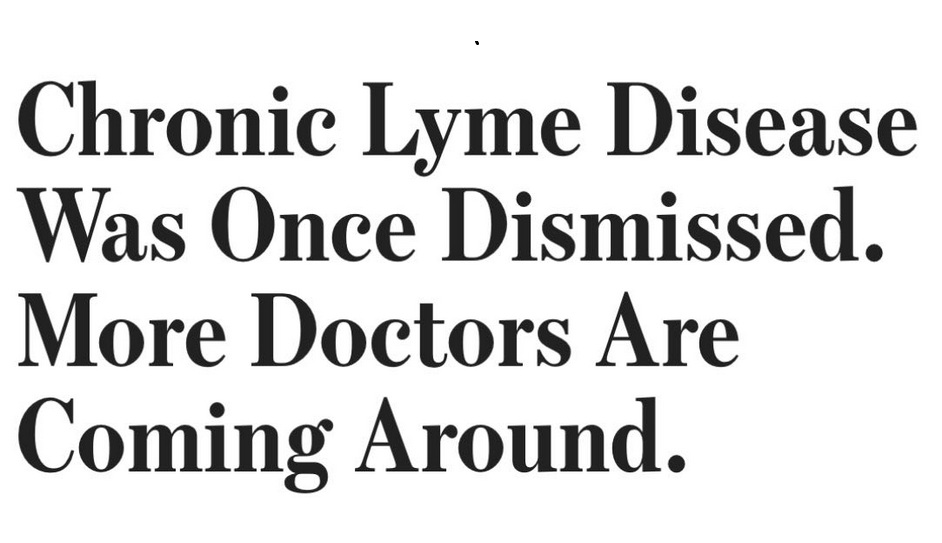
This week, The Wall Street Journal published a story with the striking headline: “Chronic Lyme disease was once dismissed. More doctors are coming around.”
The July 20 article (alas, it’s behind a paywall) explores how the medical community is reexamining its long-held skepticism toward chronic Lyme disease.
The article profiles individuals who suffered for years with debilitating symptoms—fatigue, brain fog, pain—often without validation or effective treatment.
But now, thanks to new research and rising patient advocacy, conditions once ignored or labeled as psychosomatic are now drawing serious attention from institutions like MIT, Johns Hopkins, Tufts, and Columbia.
That’s heartening news—and it got me thinking. I asked Copilot, Microsoft’s AI-powered research assistant, to help compare this latest article with WSJ’s past coverage of chronic Lyme.
How WSJ framed chronic Lyme in the past
Here’s what Co-pilot told me:
- Medical Controversy, 2012 The Journal covered disputes between the Infectious Diseases Society of America (IDSA) and the International Lyme and Associated Diseases Society (ILADS). WSJ leaned toward IDSA’s stance that short-term antibiotics were enough, and long-term treatment wasn’t medically justified. Chronic Lyme was framed as controversial and largely unrecognized.
- Reliance on medical authority WSJ reporting often echoed IDSA’s assertion that there was “no convincing biological evidence” for chronic Lyme infection post-treatment. This language subtly cast doubt on the legitimacy of patient symptoms—reinforcing mainstream skepticism.
- Legal and scientific disputes In stories about lawsuits brought by chronic Lyme patients, the Journal emphasized that medical guidelines were considered “non-actionable opinions” in court, further validating the scientific status quo.
I’ve followed Lyme coverage for more than 20 years, and I find that Copilot’s summary applies not just to WSJ, but across the broader media landscape. Point #2 above really hits home: Casting doubt on the legitimacy of patients’ lingering symptoms. Ain’t that the truth?
What’s happening now
In the July 20 article, WSJ writes:
“Long contentious, chronic Lyme–as it is called by patient advocates–has gained more acknowledgment and investment by researchers after Covid-19 showcased how an infection can leave people with lingering symptoms that last months or longer.”
This parallel with Long COVID is finally helping researchers and policymakers understand what Lyme advocates have been saying for years.
The piece also notes that:
“In May, the National Academies of Sciences, Engineering and Medicine published a report saying that research funders should put more emphasis on developing treatments for patients with lingering symptoms after Lyme disease—even as the root cause remains a mystery.”
So, are we turning a corner? After decades of dismissal, is the tide finally shifting? Maybe. If so, for those living with persistent Lyme symptoms, that could mean more validation, more research, and—hopefully—the answers they need to get well.
TOUCHED BY LYME is written by Dorothy Kupcha Leland, President of LymeDisease.org. She is co-author of Finding Resilience: A Teen’s Journey Through Lyme Disease and of When Your Child Has Lyme Disease: A Parent’s Survival Guide. Contact her at dleland@lymedisease.org.






We invite you to comment on our Facebook page.
Visit LymeDisease.org Facebook Page